
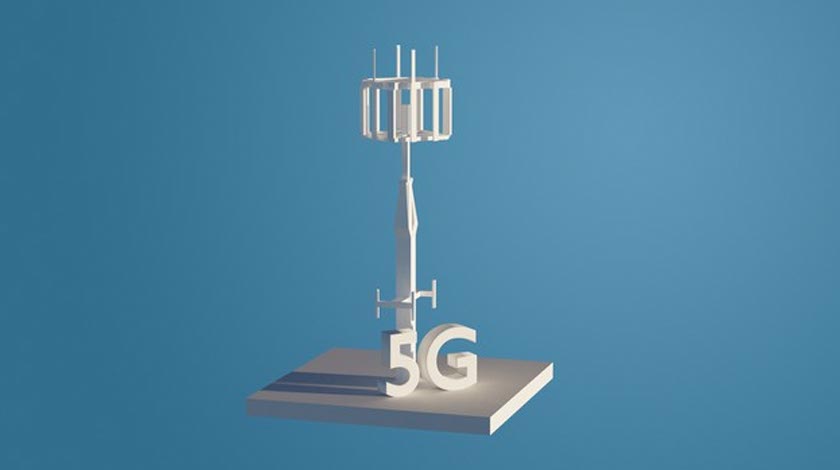
GSM, the Global System for Mobile communications, is the 2G standard that made mobile phones a global product in the 1990s. People still say "GSM" for any mobile network, but the technology has moved through 3G, 4G (LTE) and now 5G. The industry association that stewards these standards is the GSMA, and it estimates that billions of connections now run on its family of technologies. This article explains what 5G changes, what it means for everyday voice and text, and why older networks are being switched off.
What 5G is designed to do
- Enhanced mobile broadband (eMBB): much higher data speeds and more capacity, useful for video and cloud services.
- Ultra-reliable low-latency communication (URLLC): response times of a few milliseconds for industrial control, remote operations and similar uses.
- Massive machine-type communication (mMTC): support for huge numbers of low-power sensors, part of the Internet of Things. See IoT tools and technologies.
Different kinds of 5G
| Type | What it means |
|---|---|
| Low-band | Wide coverage, speeds only a little better than good 4G |
| Mid-band (sub-6 GHz) | The mainstream compromise: strong speeds and decent coverage |
| High-band (mmWave) | Very high speeds over short distances, mostly in dense city areas and venues |
| Non-standalone (NSA) | 5G radio using a 4G core network; the first step of most roll-outs |
| Standalone (SA) | 5G radio with a 5G core, enabling features such as network slicing |
What happens to voice and SMS
Voice calls on 4G and 5G networks are carried as VoIP, known as VoLTE on 4G and VoNR on 5G. Text messages are also delivered over the IP-based core network. The experience looks the same to you, but the network behind it is very different from classic GSM. Understanding that makes it easier to see why internet-based calling and messaging fit so naturally: read VoIP explained.
Why older networks are being switched off
Operators are retiring 2G and 3G to free spectrum for 4G and 5G. Very old phones, alarm systems, trackers and some payment terminals that depend on those networks have to be replaced. If you have a device that suddenly lost service, check whether your operator has closed the network it used. Also check that your phone supports the bands your operator uses for voice over LTE, otherwise calls may fail even when data works.
Do you need a 5G phone?
- If your area has strong 4G and you mostly browse, message and stream, a 4G phone is still fine.
- If you often download large files, play cloud games or work from your phone, 5G helps.
- 5G drains the battery faster in weak-signal areas; most phones let you switch back to 4G.
What it means for you
- Faster and more stable video calls, including in the browser. Try Globfone P2P chat over a good mobile connection.
- New messaging features through RCS: read about RCS.
- Cheaper international communication with internet-based tools, such as the browser WebPhone.
- Easier travel connectivity through eSIM: see eSIM explained.
5G does not by itself make calls cheaper, but it makes internet communication good enough to replace many paid minutes.
Frequently asked questions
Is 5G safe?
5G uses radio waves within the exposure limits set by international health organisations, as earlier mobile generations do.
 eSIM Explained: Flexibility and Savings for Travellers and Everyday Users
 OnePlus 8 Revisited: Specs, Strengths and Whether It Is Still Worth Using
 IoT Development Tools and Technologies: A Practical Overview
 How to Turn On RCS Chats in Google Messages (Android)